In hospitals and medical research facilities, Vacuum Blood Collection Red have become a global standard for blood sampling and transport. The production of the tubes takes place under very stringent quality controls which guarantee sterility and chemical uniformity. They are employed by hospitals for a variety of diagnostic tests, such as screening for infectious diseases, performing hormone panels and routine blood counts. Their pre-filled additives allow for the prevention of clotting or degradation of components, thus maintaining the integrity of each sample. The communication with laboratory machines like centrifuges and analyzers makes the workflow smoother. The use of Vacuum Blood Collection Red in different medical areas not only minimizes the chances of mistakes but also improves the safety of patients and ultimately leads to the provision of accurate test results in both hospital and research environments.

In clinical research blood samples for molecular biology, genetic studies, and biomarker analysis are collected with the use of Vacuum Blood Collection Red. Their sterile construction keeps DNA, RNA and proteins alive during transport and storage. Laboratories employ these tubes to hold the required chemical environments for advanced analytical techniques no more and no less than their precision. The uniform volume along with pre-measured additives minimizes the variability of sample quality, thus increasing the reproducibility of experimental results. Research with Vacuum Blood Collection Red allows hospitals and laboratories to carry out high-quality studies while securing patient safety, sample integrity, and consistent laboratory outcomes for clinical or scientific applications.
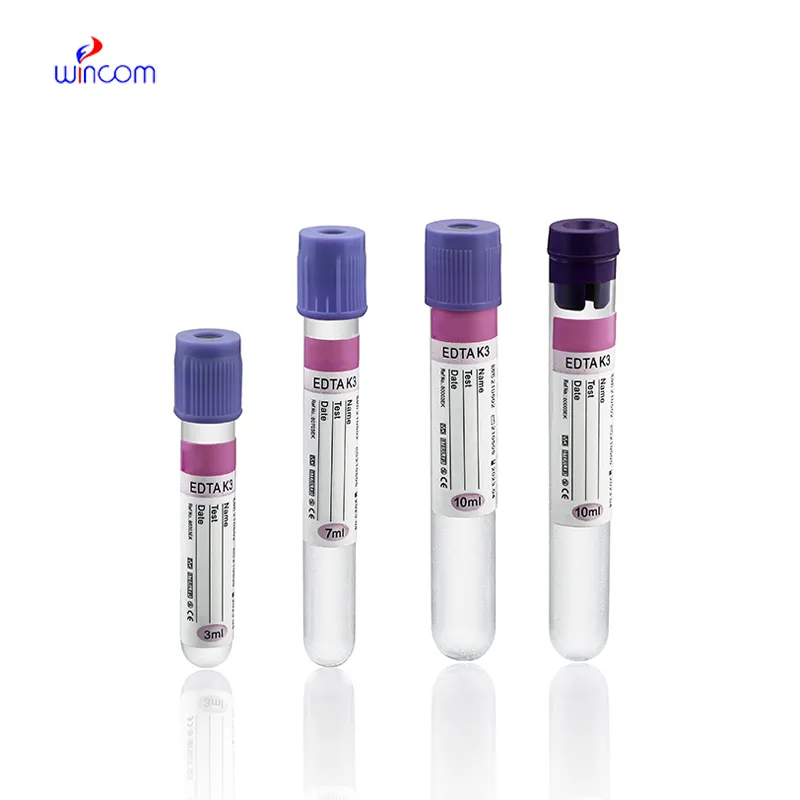
The future of Vacuum Blood Collection Red might put a stronger focus on environmental sustainability besides clinical performance. The hospitals might use tubes manufactured from recyclable or biodegradable elements that allow for no compromise on sterility or chemical stability. Furthermore, the smart designs with integrated tracking, additive optimization, and automated analyzer compatibility will facilitate laboratory work a lot more. Through the synergy of eco-friendly construction and technological enhancements, the upcoming Vacuum Blood Collection Red will not only comply with regulatory requirements but also lower laboratory waste and continue to deliver precise and trustworthy sample processing for both routine diagnostic and advanced hospital research applications.

The proper upkeep of Vacuum Blood Collection Red necessitates close supervision of the conditions and practices of storage and using them. Ultraviolet light, which can damage certain additives, must not shine on the tubes. Hospitals in most cases have a practice of doing regular quick eye examinations before the use of tubes to detect any faults. The storage systems must be designed such that they do not put any physical strain on the tubes but at the same time allow easy access. The observance of hygiene rules by the staff also minimizes the contamination risk. All these practices together make Vacuum Blood Collection Red reliable for daily laboratory operations and clinical testing sectors.
Vacuum Blood Collection Red find their application in clinical chemistry laboratories for the testing of metabolic, hormonal, and enzymatic markers with the highest precision. Most of the time, these tubes are already filled with substances such as clot activators, gel separators, or anticoagulants to make sure that the samples remain intact. Laboratory personnel depend on such tubes for the processes of automatic centrifugation, separation, and analysis. The proper treatment of Vacuum Blood Collection Red eliminates pre-analytical errors and provides uniformity in the results of multiple tests. Their shape allows for effective workflow in not only high-capacity hospital laboratories but also in specialized testing facilities, hence assisting in timely diagnosis and treatment planning for patients.
Q: In what way Blood Collection Tubes act as a barrier against infections? A: The use of sterile materials for production and the one-use-only principle combined make possible the reduction of the risk of contamination. Q: Are Blood Collection Tubes only for use in research laboratories? A: Indeed, they find substantial application in clinical research and diagnostics. Q: What kind of materials are Blood Collection Tubes made of? A: Generally, the materials can be either medical-grade plastic or glass. Q: What is the procedure to dispose of Blood Collection Tubes after the usage? A: These tubes should be treated as contaminated medical waste and disposed of in accordance with the hospital's regulations. Q: What is the Importance of Blood Collection Tubes labeling? A: The proper labeling ensures the proper patient identification and accuracy of lab processing.
I’ve used several microscopes before, but this one stands out for its sturdy design and smooth magnification control.
The hospital bed is well-designed and very practical. Patients find it comfortable, and nurses appreciate how simple it is to operate.
To protect the privacy of our buyers, only public service email domains like Gmail, Yahoo, and MSN will be displayed. Additionally, only a limited portion of the inquiry content will be shown.
I’d like to inquire about your x-ray machine models. Could you provide the technical datasheet, wa...
We’re interested in your delivery bed for our maternity department. Please send detailed specifica...
E-mail: [email protected]
Tel: +86-731-84176622
+86-731-84136655
Address: Rm.1507,Xinsancheng Plaza. No.58, Renmin Road(E),Changsha,Hunan,China


 EN
 af
 es
 ar
 tr
 sw
 pt
 th
 ur
 bn
 ne
 vi
 km
 lo
 de
 ru
 fi
 nl
 fa
 fr
 ko